Motivation vs. Personality: They Are Not the Same
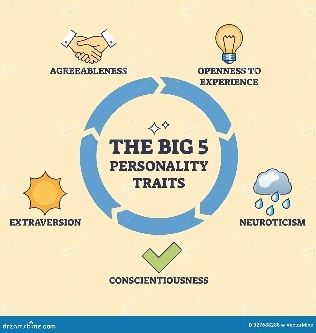
When working with individuals or teams who have taken the Inventory for Work Attitude and Motivation (iWAM), they often use the terms "personality" and "traits" when discussing their results.
When this happens, we typically convey a couple of things:
-
"Personality" is a different construct than "Motivation". A few years ago, one of our colleagues, a Ph.D. in psycyhology, when asked for a definition of personality, responded, "I don't think we have a clue what it really is." However, that doesn't stop us from talking as though we do understand what personality is when we may not, we do know that it is different from (but may overlap with) motivation.
-
One source defines a personality trait as "a relatively stable and enduring characteristic that influences how a person thinks, feels, and behaves." Although motivational and attitudinal patterns may overlap with or be connected to traits, they often function differently in different contexts or subcontexts.
Since motivation can shift with context or even subcontext, some motivational patterns may be different in the context of work than in the context of home or family. And some may not.
As for subcontext, I often give the example that my decision patterns (Individual Motives and External Reference) are significantly different when I'm running or managing the business than when I'm doing the business (consulting with a client).
When managing the business my Individual Motives (wanting to make the decisions) is stronger than my External Reference (wanting input or feedback). When consulting with a client, the two patterns reverse: Individual Motives goes down and External Reference goes way up.
Interpreting Your iWAM Results
It is important to know two things:
-
As Patrick Merlevede, the President of jobEQ once said: "It is nearly impossible to predict one's behavior from a single iWAM scale." Patrick was indicating that in almost all cases, motivation is a product of interacting patterns; that is, two or more motivational patterns may contribute to what is driving behavior.
-
Becoming aware of how one's motivation works in different contexts or subcontexts is key to making effective decisions and to managing one's resulting behavior in order to maximize outcomes.
Both of the above take a great deal of introspection and time.
By "introspection" we mean that you become the subject in your own experiment, the goal of which is to discover how motivation and other characteristics and competencies interact in different situations to drive your behavior.
You will always "behave" even if that behavior is only a private thought. You will not, however, always behave effectively even if you say or do nothing since the silence can have an impact on you (energetically or healthwise) or perhaps send a message the other person interprets as "you don't care".
So what?
One's behavior is not just a product of motivation and competencies, one's criteria (values, goals, beliefs) and emotions also play a significant role.
So, while you're doing the research on "Self" regarding motivation, it helps to build in consideration for your criteria and emotions to see what role they play as both cause and effect in the complex process of behaving.
One final thought: consider taking a look at The Performance Model to get a visual representation of the key factors at play in both the larger context and within you.
Best to you.